
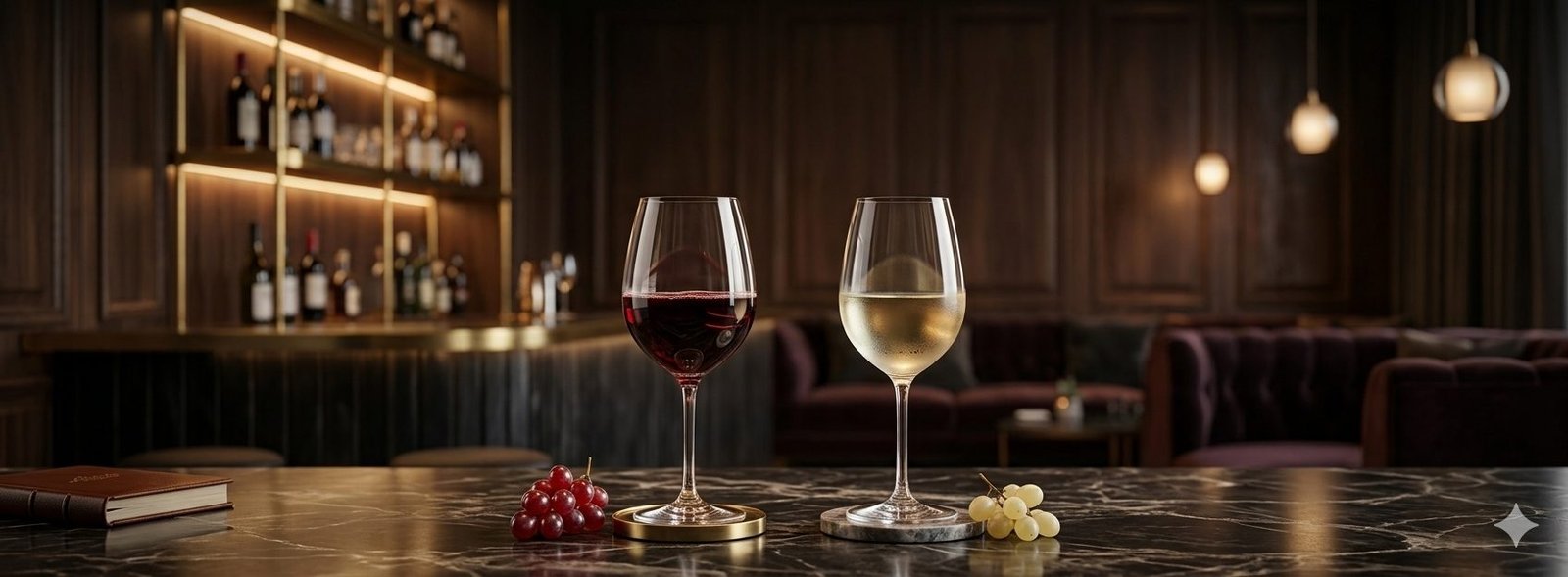
Red Wine vs White Wine: What Should You Order?
Red wine or white wine? Learn the real differences in flavour, tannin, body, food pairing and serving style, plus how to choose a wine without overthinking it.
You sit down, open the wine list and immediately reach the first decision.
Red or white?
It sounds simple until somebody starts talking about Cabernet Sauvignon, Pinot Noir, Chardonnay, Sauvignon Blanc, tannin, acidity, body, oak and food pairing.
Suddenly ordering one glass of wine feels like it requires a qualification.
It does not.
For most people, choosing between red wine and white wine becomes much easier once you understand a few basic differences and stop worrying about finding the universally “correct” bottle.
The better question is not:
Which is better, red wine or white wine?
It is:
What do you feel like drinking tonight?
The Main Difference Starts With How the Wine Is Made
One of the biggest differences between typical red and white winemaking is skin contact.
Red wine is generally fermented with the grape skins. Those skins contribute colour, flavour and tannin.
Most white wine is pressed away from the skins before fermentation, which is one reason white wine usually has much less tannin and a very different texture.
There are exceptions — wine is full of them — but this basic distinction explains a lot about why red and white wines can feel so different in the glass.
What Does Red Wine Usually Taste Like?
There is no single red-wine flavour.
A light Pinot Noir and a full-bodied Cabernet Sauvignon can feel like completely different drinks.
But red wines commonly move through flavours and aromas associated with red or dark fruit, herbs, spice, earth, oak, vanilla and other savoury or mature characteristics depending on the grape and winemaking.
The texture can also feel more structured because of tannin.
Some reds are light and fresh.
Some are soft and fruity.
Some are rich and powerful.
Some make your mouth feel noticeably dry or grippy.
So saying “I do not like red wine” after one glass is a little like saying you dislike all cocktails because you once had one Negroni you did not enjoy.
There is a lot more territory to explore.
What Does White Wine Usually Taste Like?
White wine can be equally varied.
You might find citrus, green apple, pear, stone fruit, tropical fruit, flowers, herbs, mineral character, creaminess or oak depending on the grape and production.
Some white wines are crisp and refreshing.
Others are richer and rounder.
Some are bone dry.
Others have noticeable sweetness.
This is why “white wine” alone is not enough information to predict whether you will enjoy a glass.
If you disliked one Chardonnay, that does not mean Sauvignon Blanc, Riesling or every other white wine will give you the same experience.
What Is Tannin?
Tannin is one of the most useful differences to understand.
It is a naturally occurring group of compounds found in grape skins, seeds and stems, and it can also come from oak.
Tannin creates bitterness and, particularly, a drying or astringent sensation in the mouth.
Think about strong black tea.
That slightly grippy feeling is a useful reference point.
Because red wine usually spends more time in contact with grape skins during production, tannin is much more prominent in many red wines than in most conventional white wines.
If you enjoy that structured feeling, red wine may appeal to you.
If you strongly dislike it, a lower-tannin red or a white wine may be more comfortable.
What Is Acidity?
Acidity gives wine freshness.
Think about the mouth-watering quality of citrus.
Wine acidity is more complex than simply tasting like lemon, but that sensation helps explain why a crisp white wine can feel so refreshing.
Red wines have acidity too.
The balance between acidity, tannin, alcohol, fruit and sweetness is part of what gives a wine its overall shape.
If you like drinks that feel bright, clean and refreshing, asking for a wine with good acidity is useful.
What Does “Body” Mean?
Body describes how light or full a wine feels in your mouth.
An easy comparison is the difference between skim milk and full-cream milk.
Neither is automatically better.
They simply have different weight and texture.
A light-bodied red can feel more delicate and easy-going.
A full-bodied red can feel richer and more substantial.
The same applies to white wine.
So when somebody asks what wine you like, saying:
“I want something light and fresh”
can actually be more useful than naming a colour.
Is Red Wine Stronger Than White Wine?
Not automatically.
People sometimes describe red wine as “stronger” because tannin, body and deeper flavours can make it feel more intense.
But colour does not by itself determine alcohol level.
A white wine can have significant alcohol.
A red wine can be relatively light.
If alcohol strength matters to you, check the actual wine rather than assuming from its colour.
Is White Wine Always Sweeter?
No.
This is another common misconception.
Plenty of white wines are completely dry.
Red wine can also contain residual sugar, although many common table wines are dry.
Colour and sweetness are different questions.
If you do not like sweet wine, simply ask for a dry wine.
That one sentence can narrow the options considerably.
So What Does “Dry” Mean?
In wine, “dry” means there is little perceptible sweetness from residual sugar.
It does not mean the wine has no fruit flavour.
A dry wine can smell strongly of ripe fruit while still tasting dry.
This distinction confuses many beginners because fruity and sweet are not the same thing.
A wine can taste of peach, berries or tropical fruit without containing enough residual sugar to taste sweet.
Red Wine With Beef
Red wine and beef is one of the most familiar food pairings.
There is a reason.
Rich meat and fat can work well with the structure and tannin of many red wines.
That does not mean every steak requires Cabernet Sauvignon or that white wine becomes illegal near beef.
It simply means red wine gives you many natural pairing options for richer meat dishes.
Red Wine With Burgers
This is especially relevant at The Bank.
A burger brings together beef, fat, salt, cheese, sauces and flavours created by grilling.
Red wine can handle that richness well.
A softer, fruitier red may keep the pairing relaxed, while a more structured red can stand beside a richer burger.
Beer remains a great choice.
So does a cocktail.
But if you have never tried red wine with a burger, it is worth doing at least once.
Wine does not only belong beside steak in a formal dining room.
White Wine With Chicken and Seafood
White wine is often associated with chicken, fish and seafood because its acidity and lighter profile can complement more delicate dishes without overwhelming them.
That is a useful starting point.
But the sauce matters enormously.
Grilled chicken with herbs is not the same pairing problem as chicken in a rich creamy sauce.
A light seafood pasta is different from something heavily spiced.
Instead of memorising “white with fish,” think about the whole plate.
White Wine With Rich Food
White wine can also work beautifully with richer food.
A fuller-bodied white can handle creamy sauces, cheese and substantial dishes.
High acidity can also cut through fat and refresh the palate.
So if you prefer white wine, you do not have to abandon it because somebody ordered a richer dinner.
Pairing guidelines should help you enjoy food, not force you to drink something you do not want.
Red or White With Pasta?
Ask what is on the pasta.
Tomato-based sauces often have enough acidity and savoury flavour to work naturally with many reds.
Creamy sauces may pair beautifully with fuller whites.
Seafood pasta may point you towards white.
A rich beef-based pasta may move you towards red.
The pasta itself is rarely the deciding factor.
The sauce is doing most of the work.
What About Spicy Food?
Spice can make alcohol feel more intense, so a very high-alcohol wine may not always be the most comfortable pairing.
Freshness and some fruit character can be helpful.
But spicy food varies enormously.
Indonesian chilli heat is not one single flavour, and neither is Asian food generally.
The best approach is to think about heat, sweetness, acidity and richness together rather than applying one universal “wine with spicy food” rule.
Does Red Wine Have to Be Served at Room Temperature?
This is where living in Jakarta makes the phrase “room temperature” particularly unhelpful.
Many red wines are more enjoyable slightly cool rather than at a warm tropical room temperature.
White wine is generally served cooler.
Temperature changes how aromas, alcohol and texture are perceived.
Too warm and a wine can feel heavy or alcoholic.
Too cold and some aromas and flavours may become harder to notice.
You do not need a thermometer at the table.
Just remember:
Red does not mean warm.
White does not mean frozen.
Which Is Better for a Beginner?
Whichever sounds more appealing.
If you like bright, crisp, refreshing drinks, start with a dry white.
If you like richer flavours and do not mind some tannin, try a red.
If you normally drink cocktails with citrus, a fresh white may feel familiar.
If you enjoy whisky, darker spirits or rich food, you may enjoy exploring red wine.
These are only starting points.
Your palate may immediately prove all of them wrong.
That is part of the fun.
How to Order Red Wine Without Knowing Wine
You can say:
“I would like a red that is easy to drink.”
“I do not want anything too heavy.”
“I like something fruity but dry.”
“What red works with the burger?”
“I usually do not drink wine. What would you start with?”
Those are good questions.
You do not need to pronounce a French village perfectly.
You do not need to know the vintage.
You just need to give the bartender or server enough information to help.
How to Order White Wine Without Knowing Wine
The same idea applies.
“I would like a dry white.”
“Something crisp and refreshing.”
“Not too sweet.”
“Which white works with this dish?”
“I would like something easy for one glass after work.”
Simple descriptions are useful.
A good wine recommendation should begin with your taste, not with an attempt to impress you.
Why Wine by the Glass Is Useful
If you are still learning what you like, ordering wine by the glass makes sense.
You can try a red today.
A white next time.
A different style after that.
There is no need to commit to a bottle while you are still exploring.
By-the-glass wine also works naturally for after-office drinks, casual dinners and mixed groups where not everybody wants wine.
One glass can simply be one glass.
Do Couples or Friends Have to Order the Same Wine?
No.
One person can drink red.
Another can drink white.
Someone else can have a cocktail.
Another person can order iced tea.
A table does not need beverage uniformity.
This sounds obvious, but people sometimes order a bottle they do not particularly want because they think the entire table needs to agree.
If your tastes are different, order by the glass.
Problem solved.
Red Wine or White Wine for Date Night?
Whichever both of you actually want.
Red wine often gets framed as more “romantic,” but white wine does not suddenly become administrative paperwork because you are on a date.
If dinner is casual, choose around the food and your preferences.
A glass of white with an early dinner can be just as enjoyable as red wine later in the evening.
The date matters more than the colour.
Red Wine or White Wine After Work?
Again, mood.
A cold white can feel refreshing after a long Jakarta afternoon.
A red can feel slower and more relaxed with dinner.
The advantage of wine by the glass is that you do not need to decide what the entire evening will become.
Have one.
See how you feel.
Wine Down Wednesday at The Bank
At The Bank Bar & Burgers, Wine Down Wednesday keeps the choice intentionally simple: house wine by the glass, red or white.
That makes it a useful occasion for someone who wants to try wine without turning the evening into a formal tasting.
Choose red.
Choose white.
Have it with food.
Ask us what might suit what you are ordering.
Or choose the same one you already know you enjoy.
Wine does not need to be made complicated to be taken seriously.
Red vs White: The Quick Version
Choose red if you are in the mood for deeper flavours, more structure and potentially more tannin.
Choose white if you want something that may feel brighter, fresher and generally lower in tannin.
Choose around the food if pairing matters to you.
Choose by the glass if you are still experimenting.
Ask for dry if you do not want noticeable sweetness.
And if you still cannot decide?
Order one now and try the other next time.
There Is No Winning Side
Red wine versus white wine sounds like a competition.
It is not.
Most wine drinkers do not spend their lives permanently committed to one colour.
Weather changes.
Food changes.
Mood changes.
Your taste changes.
A wine you disliked five years ago may suddenly make sense today.
The point of learning the difference is not to choose a team.
It is to make the wine list less intimidating and give yourself a better chance of ordering something you will actually enjoy.
Start there.
The rest can wait.
Baru mulai minum wine? Read our Bahasa beginner's guide to wine, or plan a casual date night in Kuningan around a glass or two. Explore our menu as well.
The point of learning the difference is not to choose a team.